2028 Ford Mustang GTD Release Date, Specs, Dimensions
2028 Ford Mustang GTD Release Date, Specs, Dimensions – The 2028 Ford Mustang GTD could represent the next stage of Ford’s extraordinary attempt to transform the Mustang from an iconic American performance coupe into a genuine road-legal supercar. It is important to separate confirmed information from future expectations: Ford has not officially announced a production 2028 Mustang GTD, its final specifications, pricing, or launch schedule. What Ford has already established, however, gives us an unusually strong foundation for understanding where a future GTD could go. The current GTD uses a supercharged 5.2-liter V8 producing 815 horsepower and 664 lb-ft of torque, reaches a claimed 202 mph, and has demonstrated a 6:40.835 Nürburgring lap with the GTD Competition.
The existing Mustang GTD is already much more than an upgraded Mustang GT. Ford developed it around lessons from the Mustang GT3 race program and engineered the chassis, aerodynamics, braking system, suspension and powertrain specifically for extreme track performance. Its rear-mounted eight-speed dual-clutch transaxle helps create near-50/50 weight distribution, while semi-active suspension, carbon-fiber components, carbon-ceramic brakes and sophisticated aerodynamic hardware give the car a fundamentally different character from the standard Mustang range. A 2028 version would therefore not need to reinvent the basic philosophy. Instead, the opportunity would be to refine an already radical machine into something faster, lighter, more efficient and even more technically sophisticated.
Ford has already demonstrated that the GTD program can evolve through specialized versions rather than relying on a traditional annual facelift. The GTD Competition, for example, introduced additional power, aerodynamic revisions, lighter components, new wheels and higher-grip tires before recording the 6:40.835 Nürburgring time. Ford says the Competition model uses targeted engine-output increases beyond the original 815-hp specification, revised rear-wing hardware, additional front dive planes, carbon-fiber aerodynamic discs, magnesium wheels and lighter seating and damping components. That development path provides a logical template for a possible 2028 GTD: fewer compromises, more downforce, lower mass and increasingly sophisticated track calibration.
The biggest question is whether Ford would actually call the next evolution a 2028 Mustang GTD or continue the current limited-production program under special editions and derivatives. Ford has emphasized that GTD production is strictly limited, and the European program has involved only a very small number of customer opportunities. Consequently, a hypothetical 2028 car should not be treated like a normal high-volume Mustang replacement. It would likely remain a hand-built, highly exclusive performance product positioned against exotic sports cars rather than conventional pony cars. That exclusivity could become just as important as horsepower when Ford decides how the next GTD fits into the Mustang family. 2028 Ford Mustang GTD Release Date
2028 Ford Mustang GTD Redesign and Update Plan
Exterior & Interior
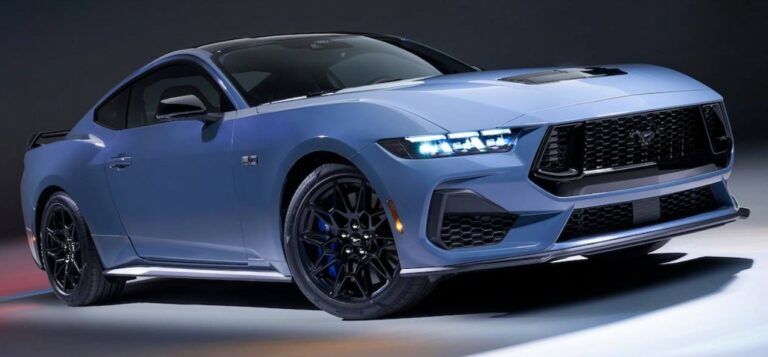
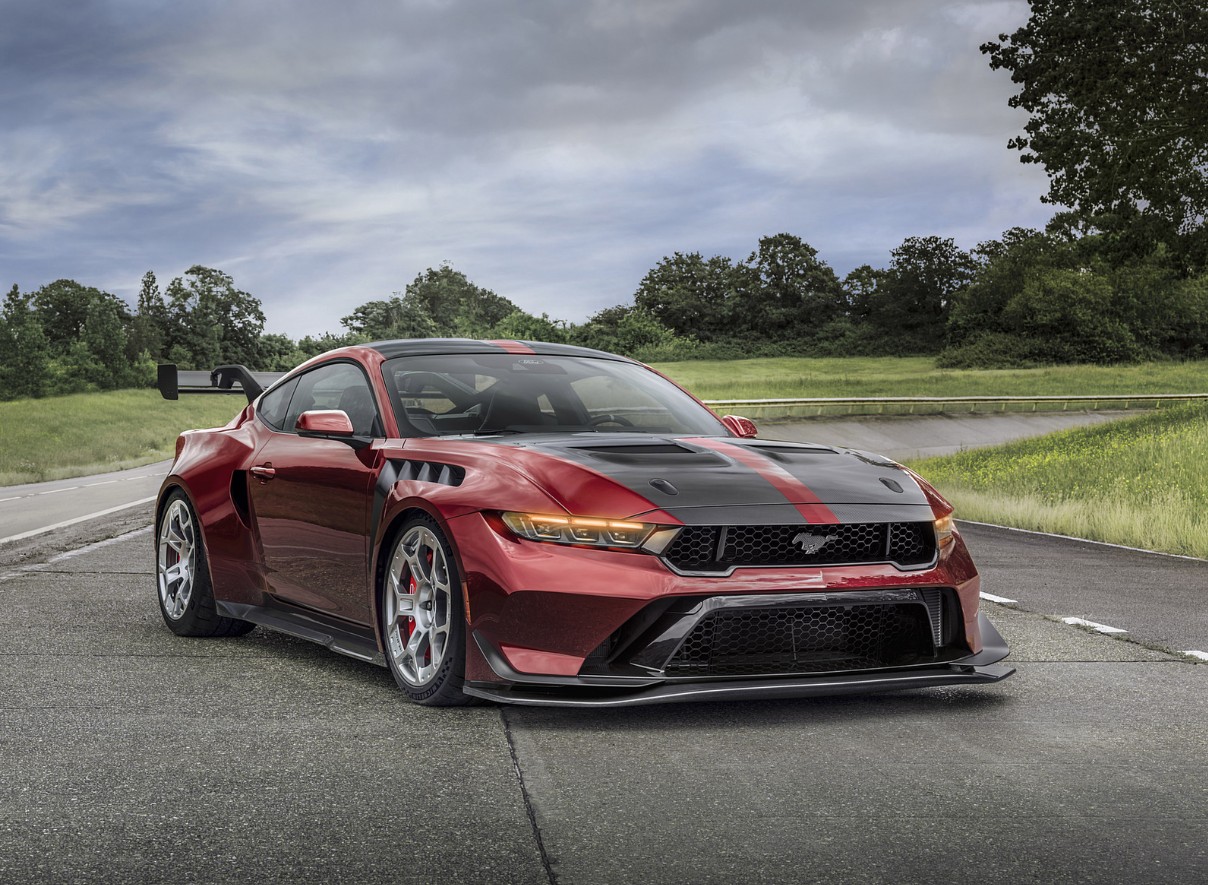
The exterior of a potential 2028 Mustang GTD would have very little reason to become conservative. The current car is deliberately dramatic, with an extremely wide stance, enormous aerodynamic surfaces, pronounced front openings, large fender vents and a massive rear wing. The design communicates function rather than merely styling. Ford uses GT3-inspired aerodynamic thinking throughout the vehicle, including front aero management, wheel-arch pressure relief and available active aerodynamic technology. The 2028 version could sharpen those elements with a more efficient front splitter, revised dive planes, redesigned side vents and an even more carefully optimized rear wing. The objective would be additional aerodynamic performance without creating unnecessary drag.
Carbon fiber would likely remain one of the defining materials. The current Mustang GTD already uses carbon-fiber body components and a carbon-fiber driveshaft, while the Liquid Carbon version demonstrates how Ford can expose the underlying construction as part of the vehicle’s identity. Ford has stated that Liquid Carbon eliminates paint and uses bonded carbon-fiber door construction, reducing weight by approximately 13 pounds compared with a painted Carbon Series car equipped with the Performance package. For a 2028 version, more extensive use of carbon fiber, magnesium and other lightweight materials could help offset the weight associated with increasingly sophisticated cooling, electronics and emissions equipment.
The proportions should remain unmistakably GTD even after an update. A long front section would continue to accommodate the supercharged V8, while the rear-mounted transaxle would remain central to the vehicle’s weight distribution philosophy. Wide tires, enormous brake hardware and a low ride height would reinforce its racing character. Ford could introduce new wheel designs with additional aerodynamic optimization, while the rear bodywork could become cleaner around the exhaust outlets and cooling channels. The result should look like a machine developed around lap time rather than a standard Mustang dressed with an aggressive body kit. That distinction is one of the reasons the GTD has attracted attention beyond traditional Mustang audiences.
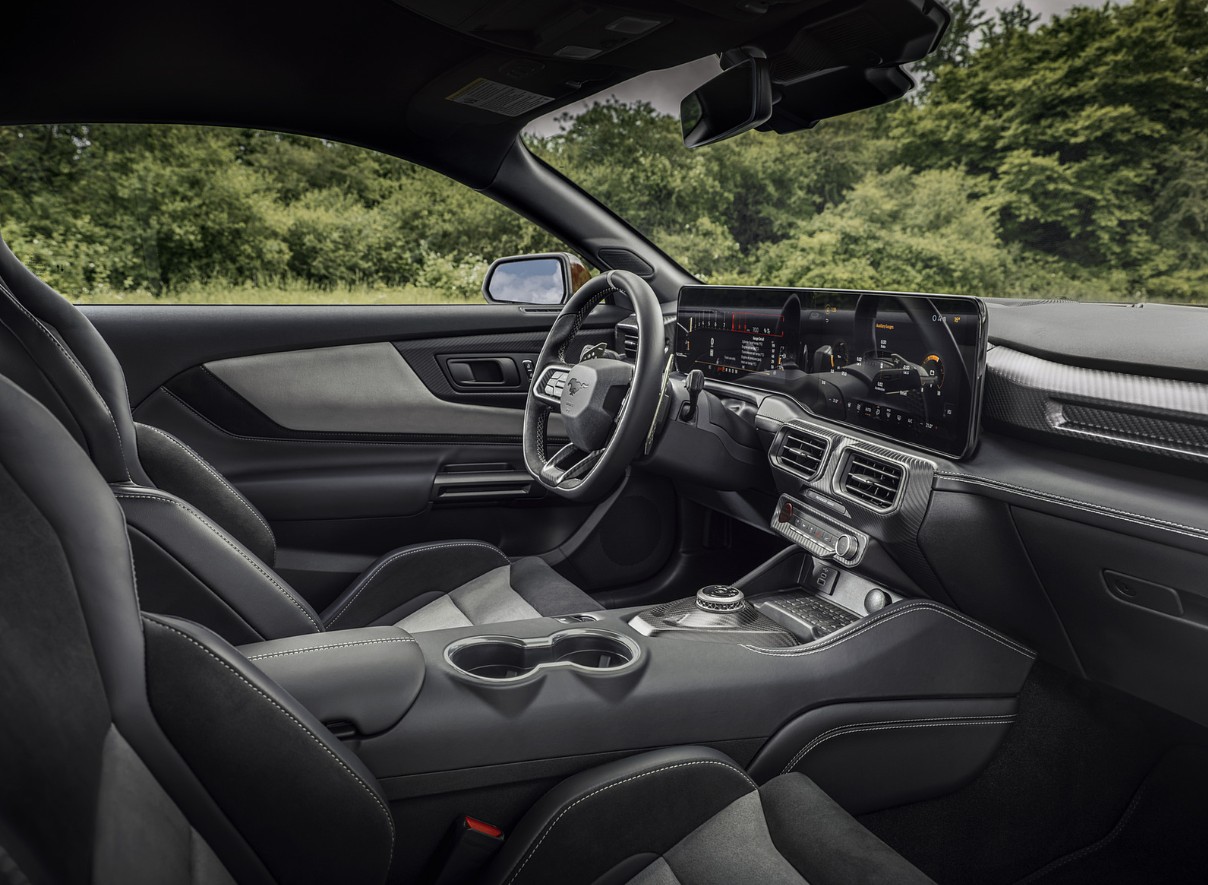
Inside, the 2028 Mustang GTD should continue to prioritize the driver rather than imitate a luxury grand tourer. The existing cockpit uses RECARO seats, Miko suede, leather and carbon fiber, while available titanium components can include paddle shifters, a rotary shifter and a serial plate made using titanium sourced from retired Lockheed Martin F-22 components. A future cabin could retain this unusual blend of motorsport technology and craftsmanship while introducing faster displays, improved telemetry, more configurable performance screens and additional data logging. The interior should feel special without becoming unnecessarily heavy.
2028 Ford Mustang GTD Specs
Engine & Performance
The engine will remain the heart of the 2028 Mustang GTD story if Ford chooses to continue the formula. The current GTD’s 5.2-liter supercharged V8 produces 815 horsepower at 7,400 rpm and 664 lb-ft of torque at 4,800 rpm. Ford pairs it with an eight-speed dual-clutch transmission and sends power through a carbon-fiber driveshaft to a rear-mounted transaxle. Those specifications already place the GTD in a territory occupied by highly specialized supercars. A 2028 model would therefore not need an enormous increase in output to become more competitive. Even an 850-hp target would represent a modest evolution compared with the current car while leaving significant room for improvements in weight, traction and aerodynamics.
The GTD Competition already offers a clue about how Ford could approach additional power. Ford described the Competition model as using hardware updates and aggressive tuning to push the supercharged V8 beyond the original GTD’s 815-hp output. For a future production version, approximately 825 to 850 horsepower would be a realistic projection rather than an official specification. The more important objective would be maintaining power consistently during repeated track sessions. Larger or better-positioned cooling systems, improved intercooling, optimized oil management and more efficient heat extraction could allow the engine to maintain its output lap after lap instead of merely producing an impressive dyno number.
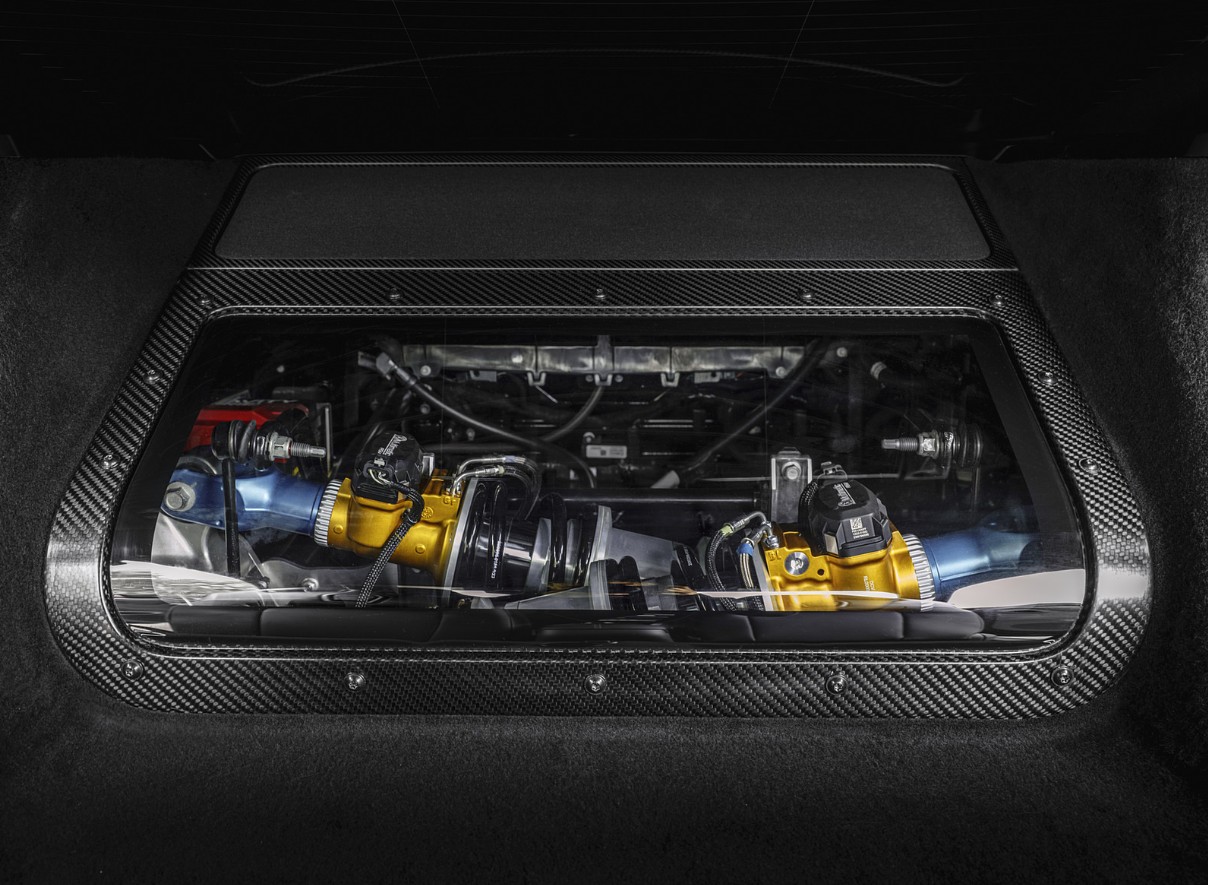
The chassis could become even more important than the engine. The current GTD uses a race-derived short-long-arm front suspension, inboard rear suspension, adaptive dampers and a dual ride-height system capable of lowering the car by 40 mm for track driving. A 2028 update could bring a more advanced damper calibration, quicker electronic control, lighter suspension components and additional chassis stiffness. The Competition program has already demonstrated that weight reduction can work together with aerodynamic development and increased tire grip to produce major lap-time gains. The future GTD could follow that philosophy rather than simply increasing engine output.
Braking and tire technology would also be central to the next generation. The current GTD uses six-piston Brembo forged carbon-ceramic front brakes and Michelin Pilot Sport Cup 2R tires, with the braking system designed to handle the tremendous speeds and repeated high-load track use. A 2028 model could employ an even more advanced carbon-ceramic package, lower unsprung mass and a new generation of track tires developed specifically around the GTD’s suspension geometry. Combined with active aerodynamics, those changes could potentially allow Ford to pursue another Nürburgring improvement. A sub-6:40 lap would be speculative, but the engineering direction makes such an ambition understandable. 2028 Ford Mustang GTD Release Date
2028 Ford Mustang GTD Fuel Economy
Fuel economy is unlikely to be the Mustang GTD’s headline specification, and official EPA figures for a hypothetical 2028 version do not exist. The current car’s 815-hp supercharged V8, wide high-performance tires, aerodynamic hardware and track-oriented calibration naturally prioritize performance over fuel consumption. It would be misleading to assign a precise 2028 MPG figure before Ford conducts certification. What can be predicted with greater confidence is that efficiency improvements could come through thermal management, engine calibration, reduced friction, smarter transmission control and weight reduction rather than through downsizing the engine.
The GTD’s dry-sump lubrication system also demonstrates how deeply Ford engineered the vehicle around high-g driving. Ford describes it as the first dry-sump oil system fitted to a road-going Mustang GTD, increasing oil capacity and reducing the risk of oil starvation under sustained high lateral loads. A future model could enhance this philosophy with improved fluid cooling, upgraded transmission thermal management and more sophisticated data monitoring. Fuel consumption would remain secondary to maintaining reliable performance, but better thermal efficiency could make the car more usable on long road journeys without compromising its track credentials.
2028 Ford Mustang GTD Safety Features
Safety on a car like the Mustang GTD is fundamentally different from safety on a conventional family vehicle. The primary engineering challenge is maintaining predictable behavior when the car is traveling at extreme speeds, braking from high velocity and generating substantial lateral acceleration. The current GTD addresses that challenge with race-derived suspension geometry, sophisticated damping, high-performance brakes, aerodynamic downforce and carefully controlled chassis behavior. Ford also incorporates the electronic architecture of the seventh-generation Mustang, supporting personalized drive modes and over-the-air software updates. A future version could expand software-based chassis control while maintaining a strong emphasis on mechanical feedback.
Driver-assistance technology could remain available without compromising the GTD’s track-oriented purpose. Conventional systems such as forward collision warning, automatic emergency braking, blind-spot monitoring, rear parking assistance and camera-based visibility aids could be integrated into the vehicle’s road-going systems. However, Ford would need to carefully separate road-driving assistance from track functions. A system designed for public-road safety cannot simply be allowed to intervene unpredictably during high-speed circuit driving. A future GTD could therefore offer more sophisticated driver-assistance technology for everyday use while automatically restricting certain functions when track modes are selected. 2028 Ford Mustang GTD Release Date
2028 Ford Mustang GTD Release Date & Price
Unlike a normal Mustang, the 2028 Mustang GTD would probably not offer a long list of conventional trim levels. The existing program is structured around an extremely limited production model with specialized packages and editions. Ford has already introduced versions such as the Performance package, Carbon Series, Liquid Carbon, Spirit of America and GTD Competition, each demonstrating a different interpretation of the same basic platform. A future model could therefore continue with a base GTD, a more aggressive Performance specification, a lightweight Carbon Series and an ultra-limited Competition derivative rather than conventional entry, mid-level and premium trims.
Pricing would be one of the most significant differences between the GTD and the rest of the Mustang family. When Ford first announced the GTD, it said pricing was expected to begin at approximately $300,000 MSRP, while the current program has become substantially more exclusive through specialized versions and packages. A hypothetical 2028 model could reasonably move beyond the $350,000 threshold, particularly if it incorporated more carbon fiber, magnesium components, advanced active aerodynamics and additional hand-built hardware. These numbers are projections rather than confirmed Ford pricing. Options and limited-edition specifications could push individual cars considerably higher.
There is currently no official 2028 Mustang GTD release date. Ford’s latest GTD developments indicate that the company is still expanding the current program rather than announcing a conventional next-generation replacement. The GTD Competition was announced in April 2026 as a strictly limited future special edition for North America, while the European program has also remained highly restricted. If Ford eventually decides to create a 2028 evolution, a reveal during 2027 followed by limited production in 2028 would be one possible scenario. It is equally possible that the GTD name remains attached to special editions of the current-generation car rather than receiving a clean-sheet redesign.
Conclusion
The 2028 Ford Mustang GTD has the potential to become an even more remarkable interpretation of Ford Performance engineering, but it should currently be treated as a future projection rather than a confirmed production model. The existing GTD has already achieved numbers that would have seemed extraordinary for a Mustang only a few years ago: 815 horsepower, 202 mph and a Ford-verified 6:40.835 Nürburgring lap for the GTD Competition. Its carbon-fiber construction, rear transaxle, semi-active suspension, carbon-ceramic brakes and supercharged V8 give it a technical foundation that does not require radical reinvention.
The most convincing 2028 evolution would focus on refinement rather than headline horsepower alone. Lower weight, better aerodynamic efficiency, stronger cooling, faster transmission response, more advanced suspension control and improved tire technology could make a future GTD significantly faster without requiring a dramatic change to the engine. The Competition program has already demonstrated this philosophy, gaining substantial Nürburgring performance through a combination of power, aero, grip and mass reduction. That approach would make considerably more sense than simply chasing a four-digit horsepower figure.
Exclusivity would also remain fundamental. The Mustang GTD is not intended to compete with ordinary Mustang buyers, and its limited production places it in a different commercial category from the Mustang GT or Dark Horse. A future GTD could therefore become even more personalized, with serialized production, bespoke colors, exposed carbon, custom interior materials and specialized performance packages. Ford has already demonstrated that customers can receive an unusually high level of visual and material customization, including unique carbon treatments and special-edition liveries.
Ultimately, the 2028 Mustang GTD could become the point where Ford’s Mustang performance philosophy moves even closer to the world of exotic supercars. No official production plan has been announced, so its future remains uncertain. Yet the engineering trajectory is clear: the current GTD has established a serious performance benchmark, and the GTD Competition has shown that Ford is willing to push the concept substantially further. If a 2028 evolution arrives with greater power, lower mass, smarter aerodynamics and even sharper chassis control, it would not simply be another expensive Mustang. It could become one of the most technically ambitious road-going Mustangs Ford has ever built.